Tradar — Prototype Walkthrough
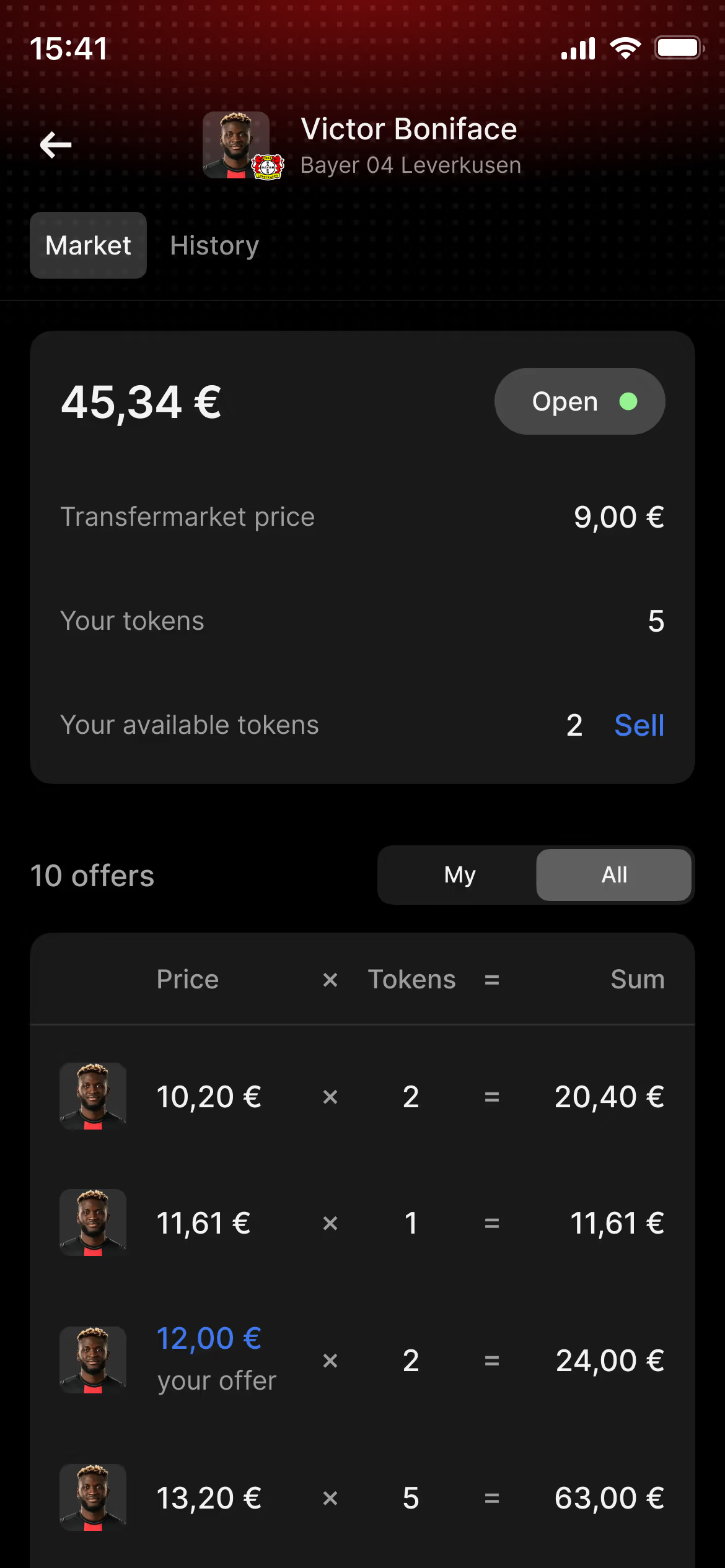
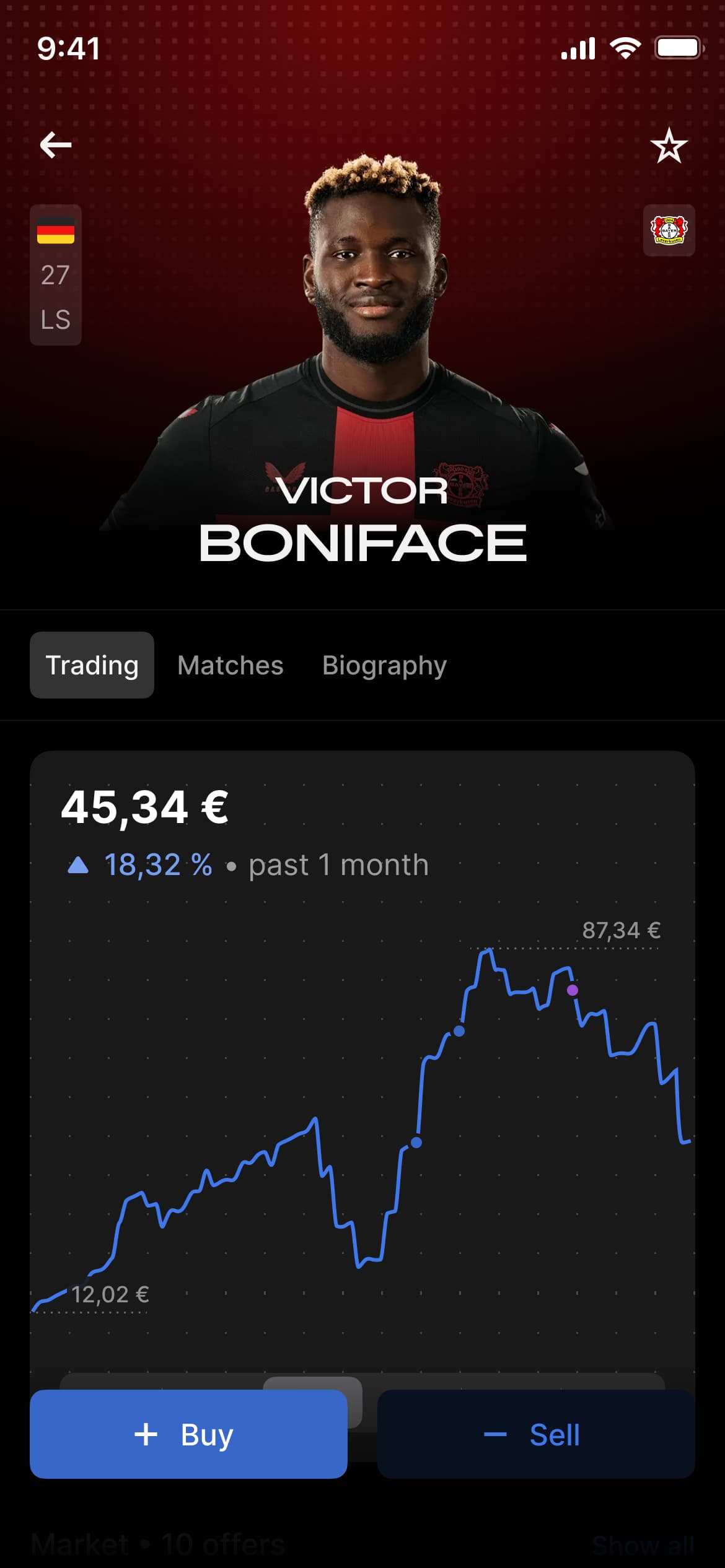
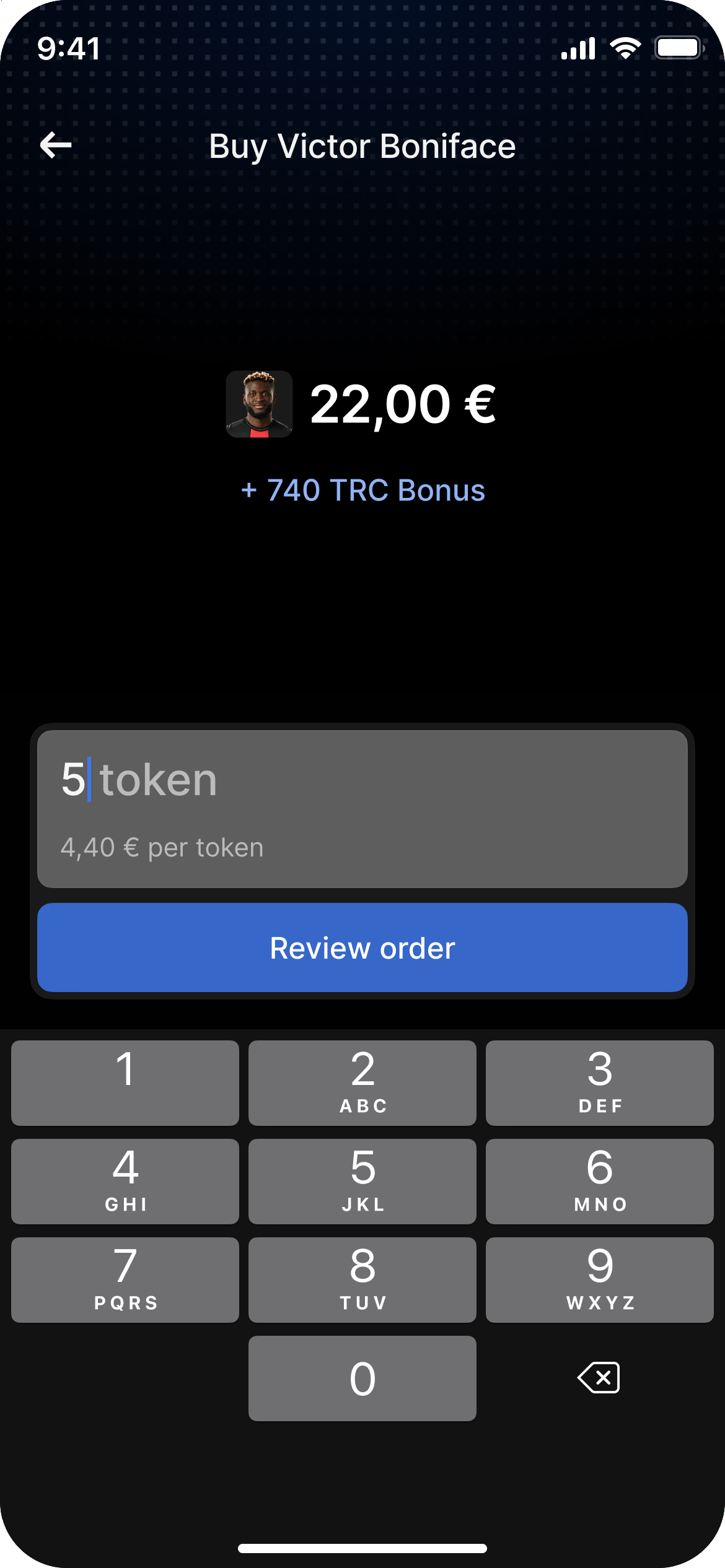
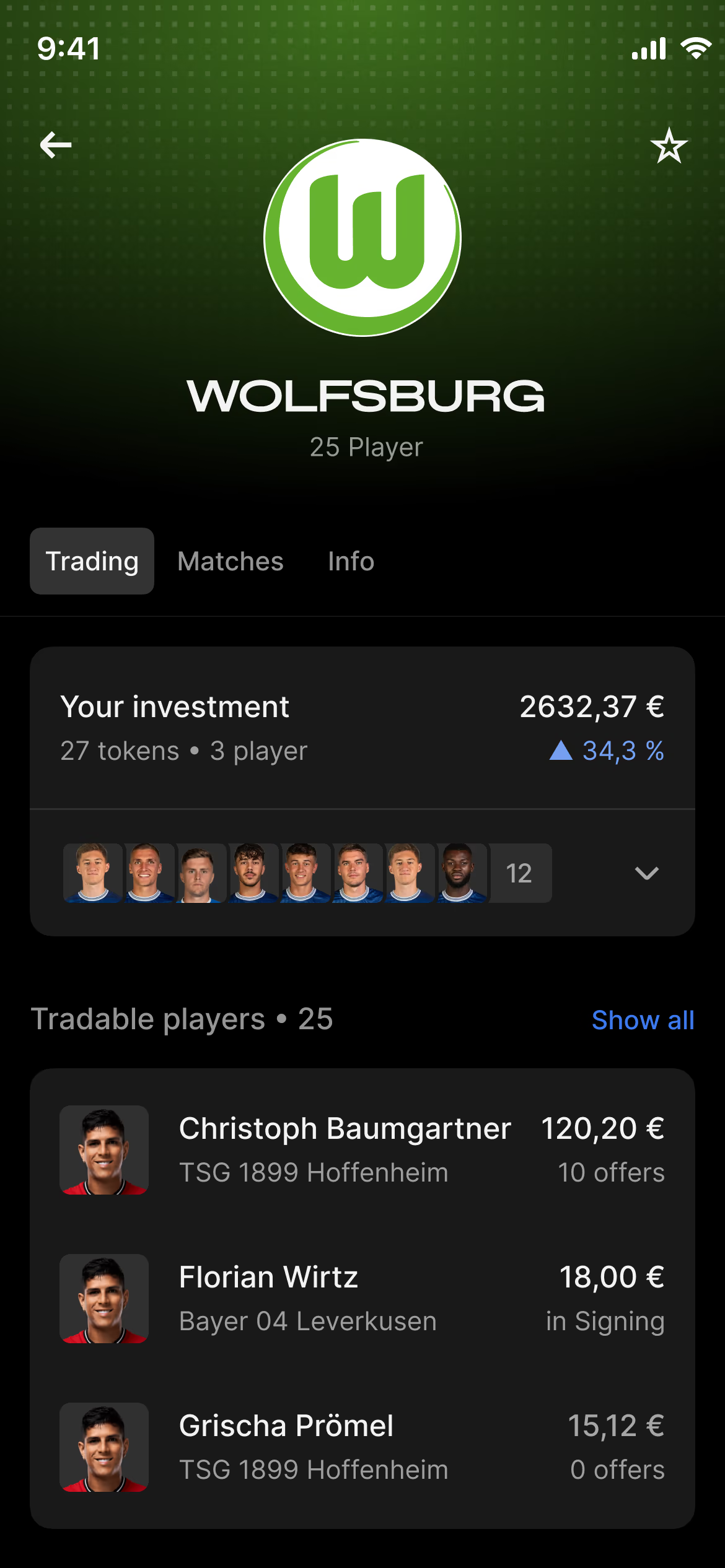
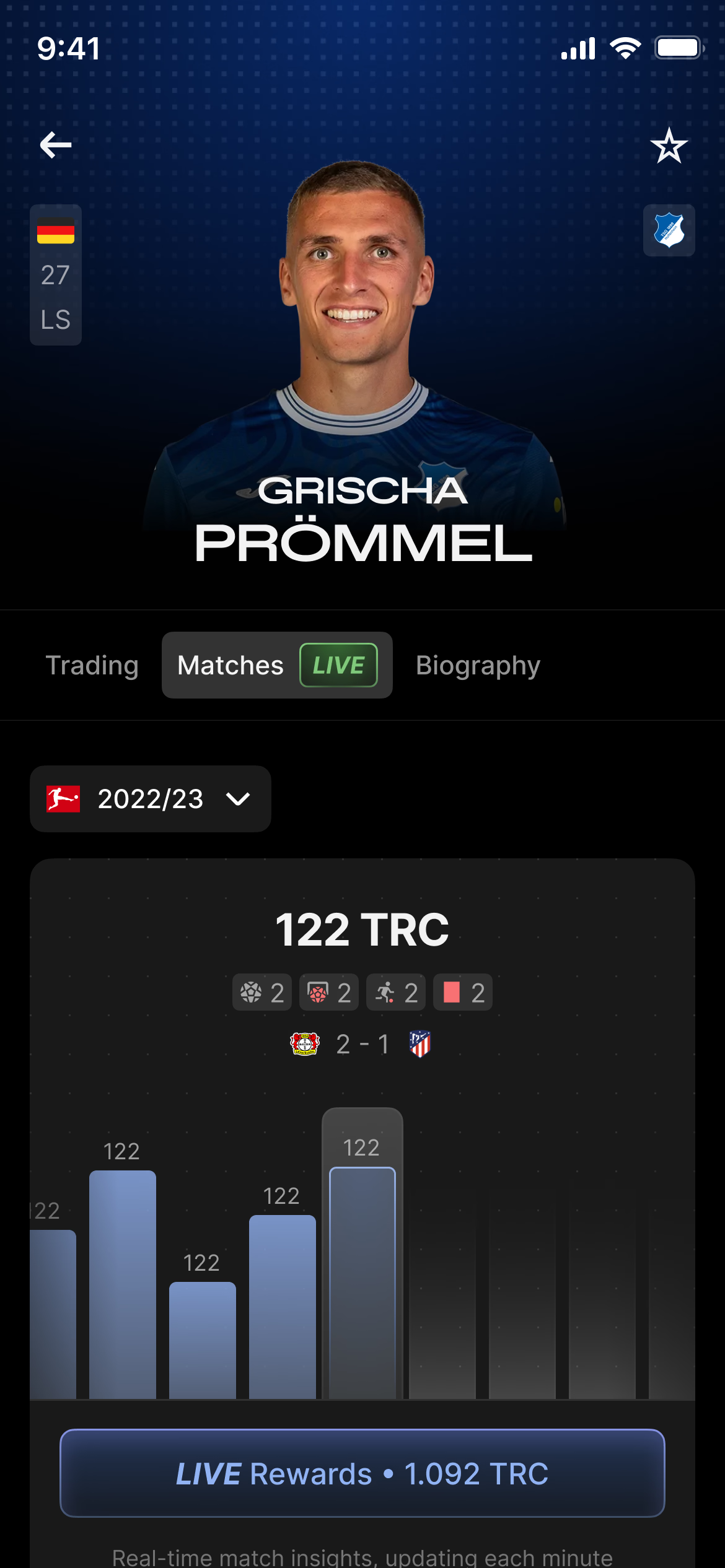
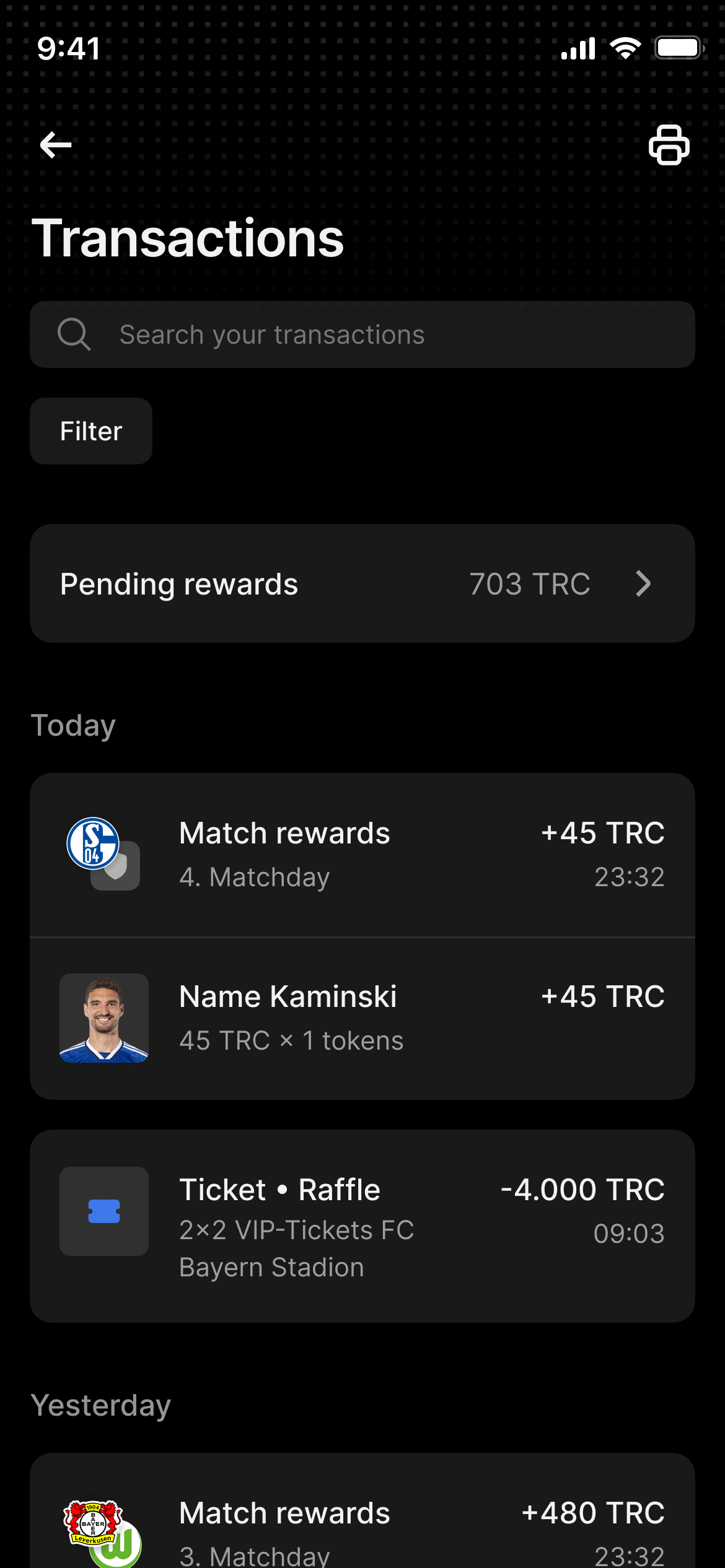
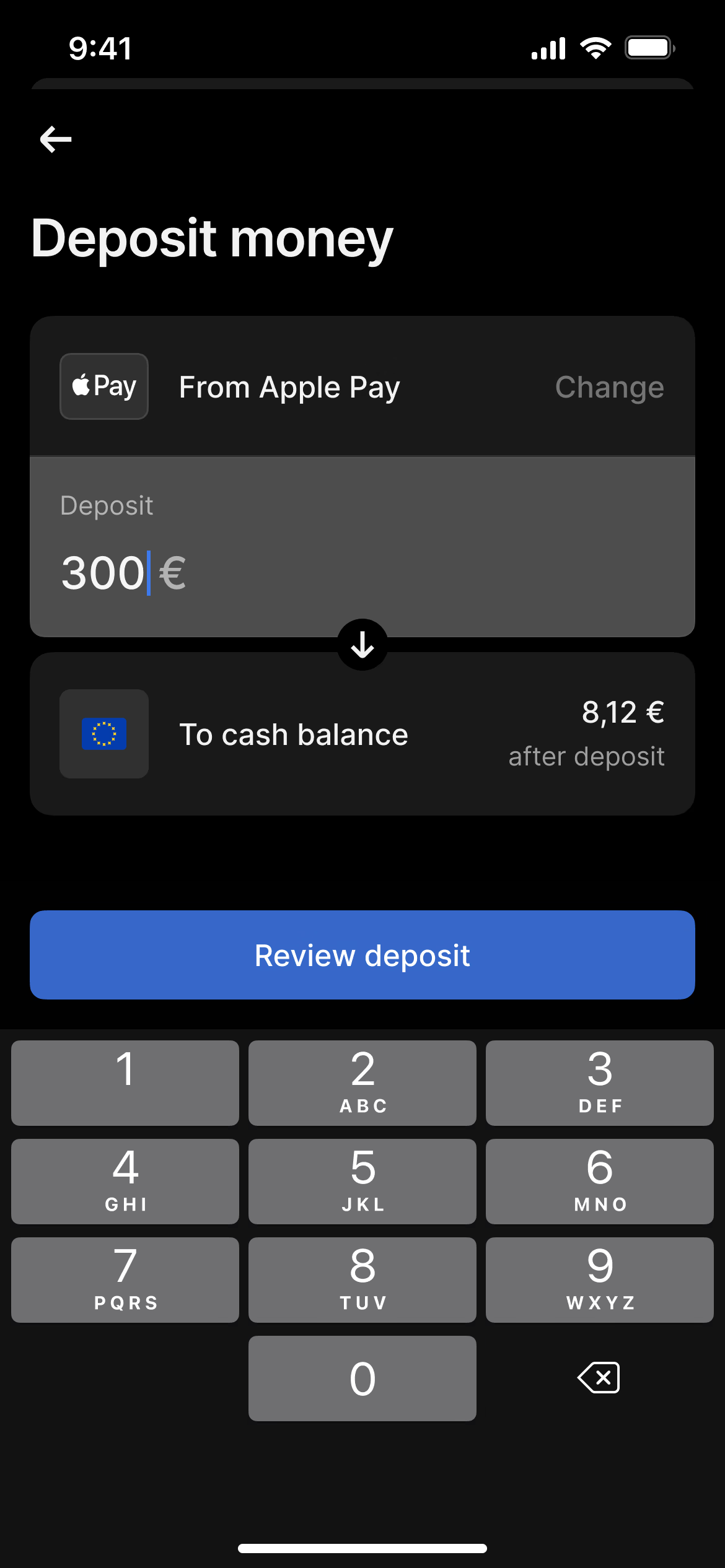
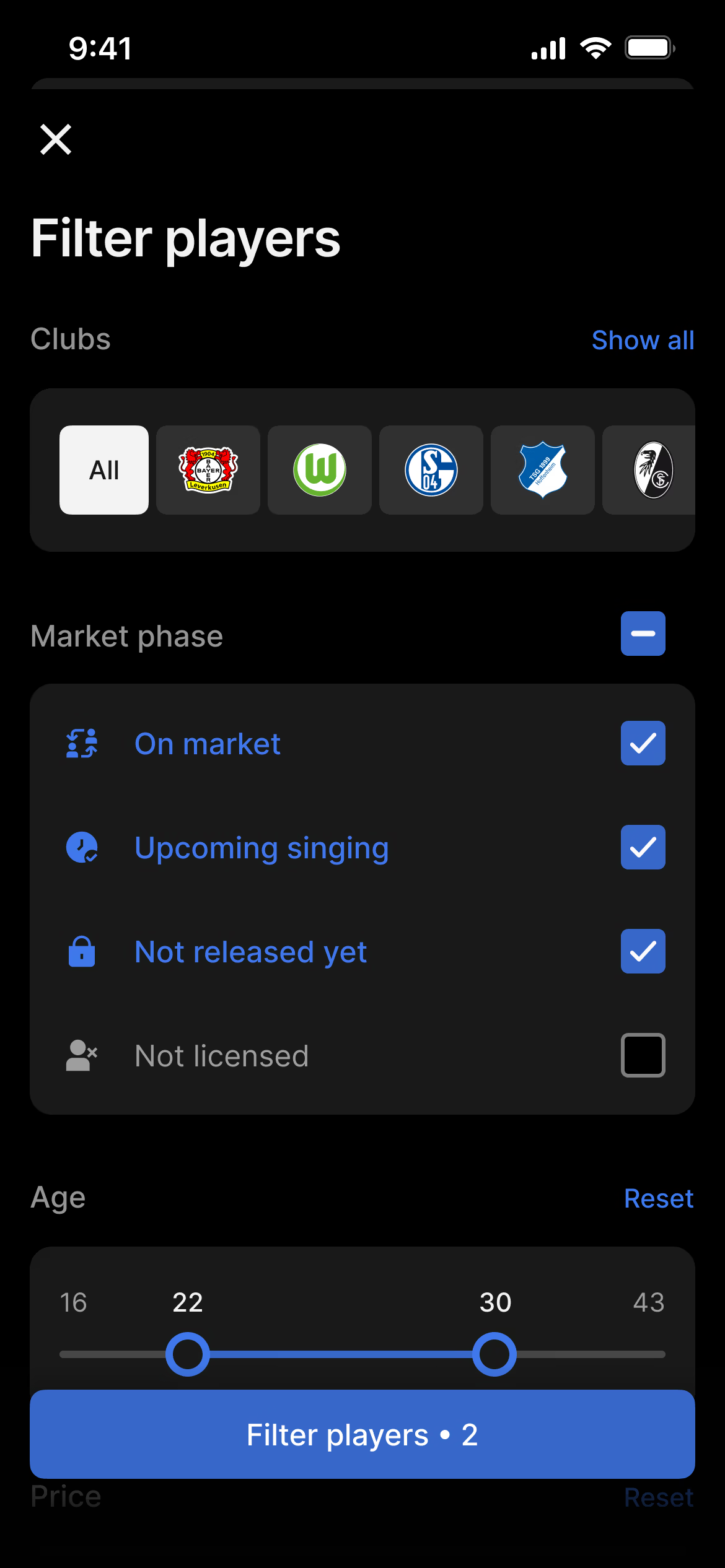
A mobile platform for football fans to legally invest in soccer players. Built for MFC Labs GmbH in cooperation with Userdoo.





Context and Role
I worked as a freelance UX/UI Designer for MFC Labs GmbH (later EML Sport Innovation) in cooperation with Userdoo. I was introduced to the project by Tommy Haake, whom I met at THI Ingolstadt. I spent almost two years on this project. The objective was to build a mobile platform for traditional football fans to legally invest in soccer players.
The Problem
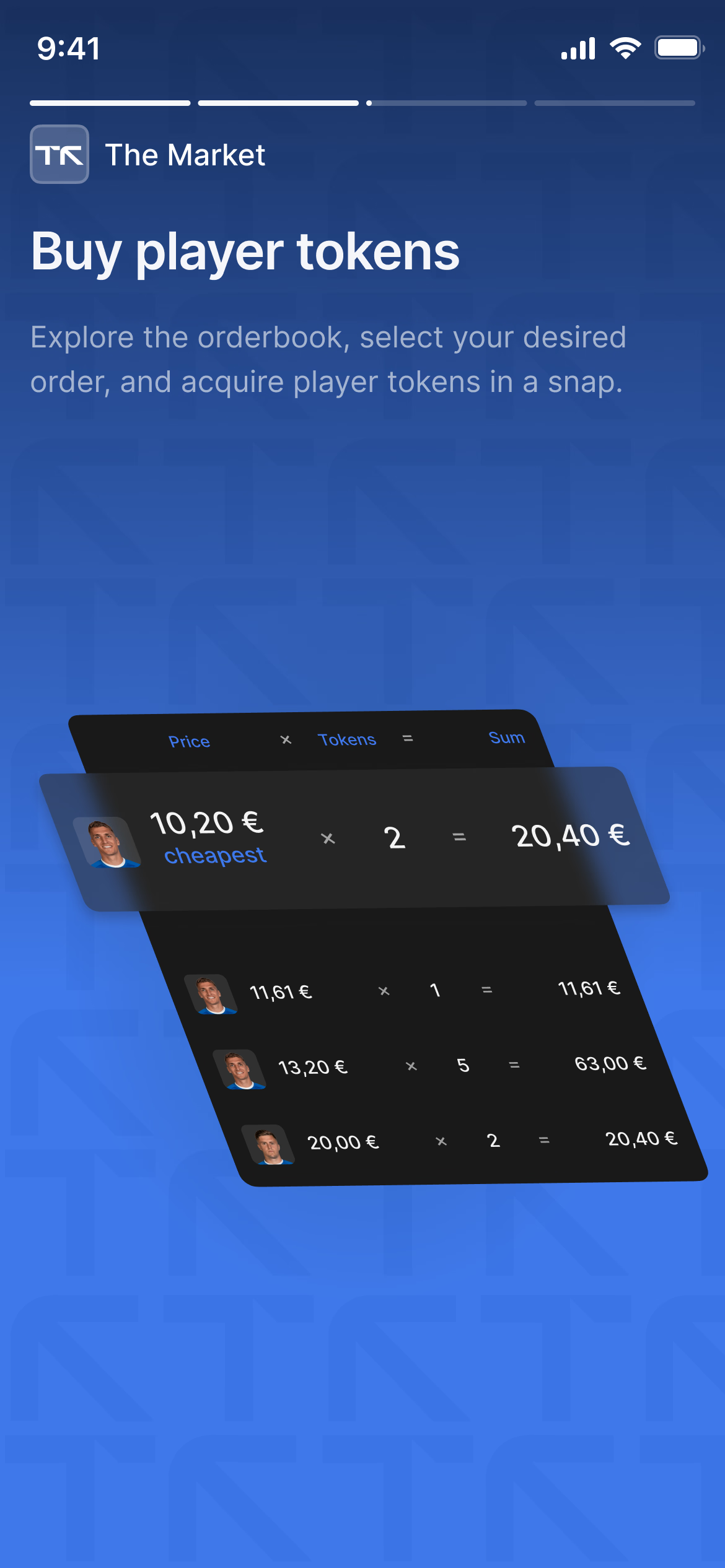
MFC Labs GmbH aimed to build the first platform of its kind. The goal was to start with Peer to Peer (P2P) trading and eventually advance into an order book based system. When a player was bought, the investment generated dividends in a secondary currency called TRC. This dividend was calculated directly from the real match performance of the respective soccer player.
The Challenges
Because users invested real money into the platform, establishing trust was fundamental. Trust required absolute transparency regarding costs, processes, and a clean user experience. To understand effective communication for financial technologies, I analyzed blogs by Peter Ramsey. His analyses of other FinTech startups helped me evaluate what worked and what could be improved. This research guided how we communicated fees, the buying and selling processes, system delays, and dividend distributions.
Furthermore, users had to open an official bank account within the app. The registration flow had to be as straightforward and simple as possible. To organize future iterative versions, I documented an idea regarding the Know Your Customer process. If users scan their passport or ID, manual entry of names and streets could be skipped. The identity provider we worked with did not supply this data at the time, which required manual data entry, but I noted this as an interesting startup idea and a necessary future improvement.
Interface Design
My work began with cleaning up the old design files and aligning the new interface with strict legal requirements. I incorporated the brand guidelines into the new visual direction. I designed the entire product largely independently, while maintaining continuous feedback loops with Tommy Haake, CTO Christian Dotterweich, PM Klaudia Khamani, and the development team.
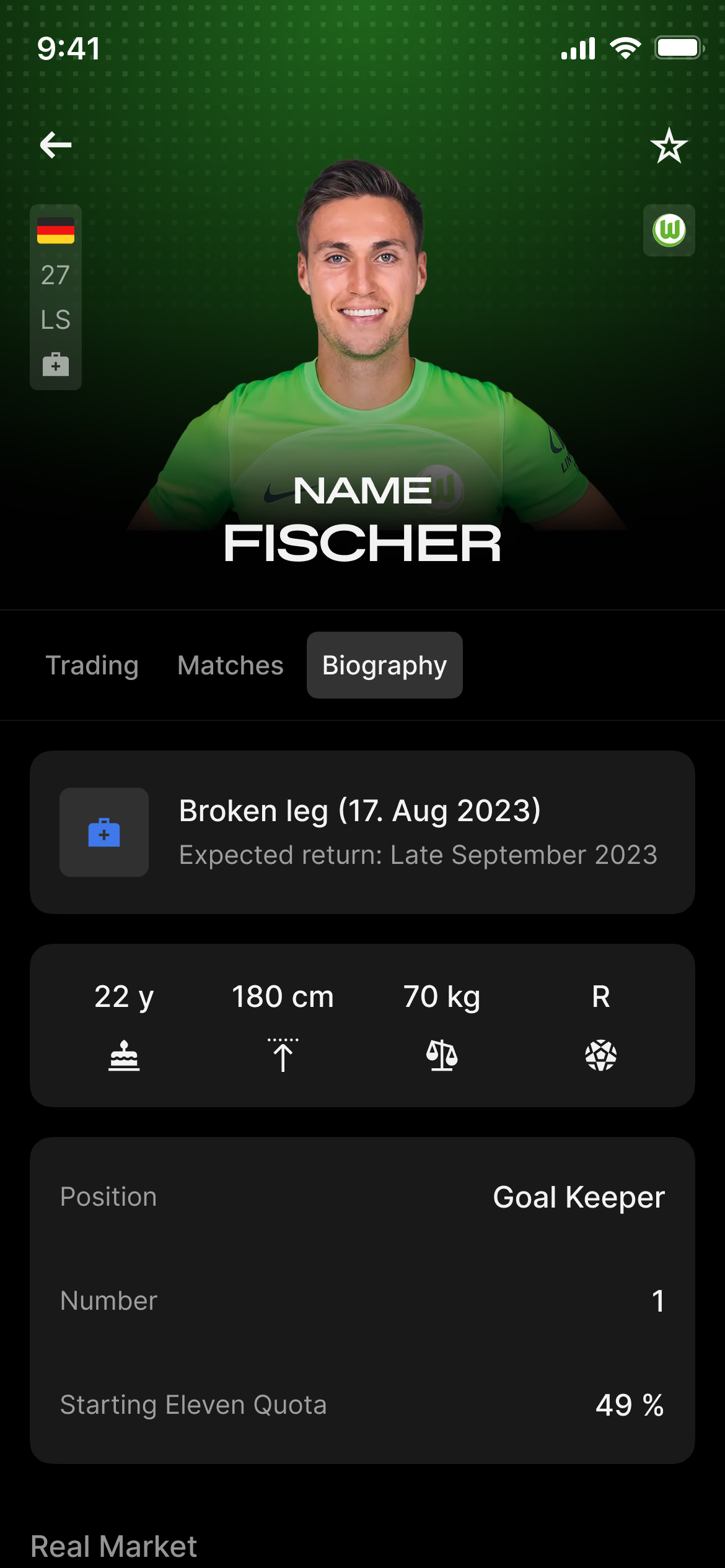
The final design consisted of over 170 screens. This scope included the complete onboarding flow for opening a bank account, application tutorials, buying and selling processes, detailed player statistics, the market, the store, and notification design. All screens were connected into a fully functional prototype representing every state of the application. This prototype was utilized for user testing and provided exact clarification for the development team.
Design System
I built a Figma design system from scratch to keep the platform scalable, manageable, and easy to work with. It aligned strictly with the brand guidelines and consisted of over 130 components and variants. It utilized full auto layout and applied specific design tokens.
Storybook Synchronization
To align the design with the code, I established a synchronization between the Figma UI components and the React Native code using Storybook. This was particularly important for list item components, which were used extensively throughout the application. Making sure the code behaved and looked exactly as it did in Figma was a priority.
I aligned the property names, styling, and behavior. This ensured developers only had to set the correct properties on their components to achieve the intended visual result without friction.
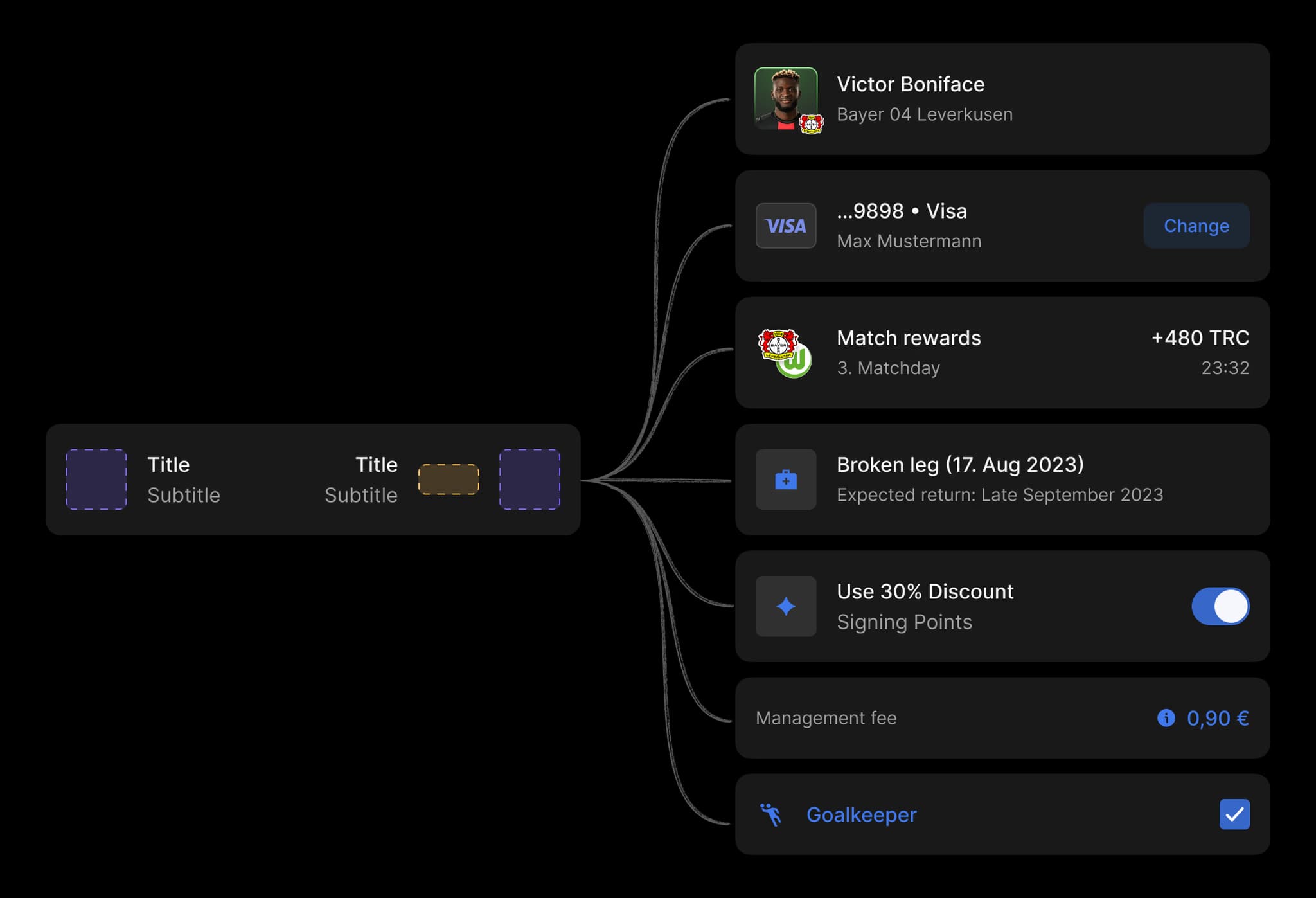
List Item Component
Additional Responsibilities
As the sole UX designer responsible for the entire product, I was tightly integrated with the team and involved from the inception of ideas. UX does not happen in the background.
Price Building
To calculate a user portfolio value, we needed to calculate a reasonable price for the underlying assets. In Peer to Peer trading, this is complex because the user sets the price. We required a smoothing mechanism that was stable against market corruption but still reflected updated prices. I developed a tool to simulate different averaging approaches for the technical team.
UX Writing
I wrote the user interface copy myself. Inspired by the Apple Human Interface Guidelines, I created a reusable Markdown prompt to ensure the language remained aligned with the target audience.
Asset Creation Pipeline
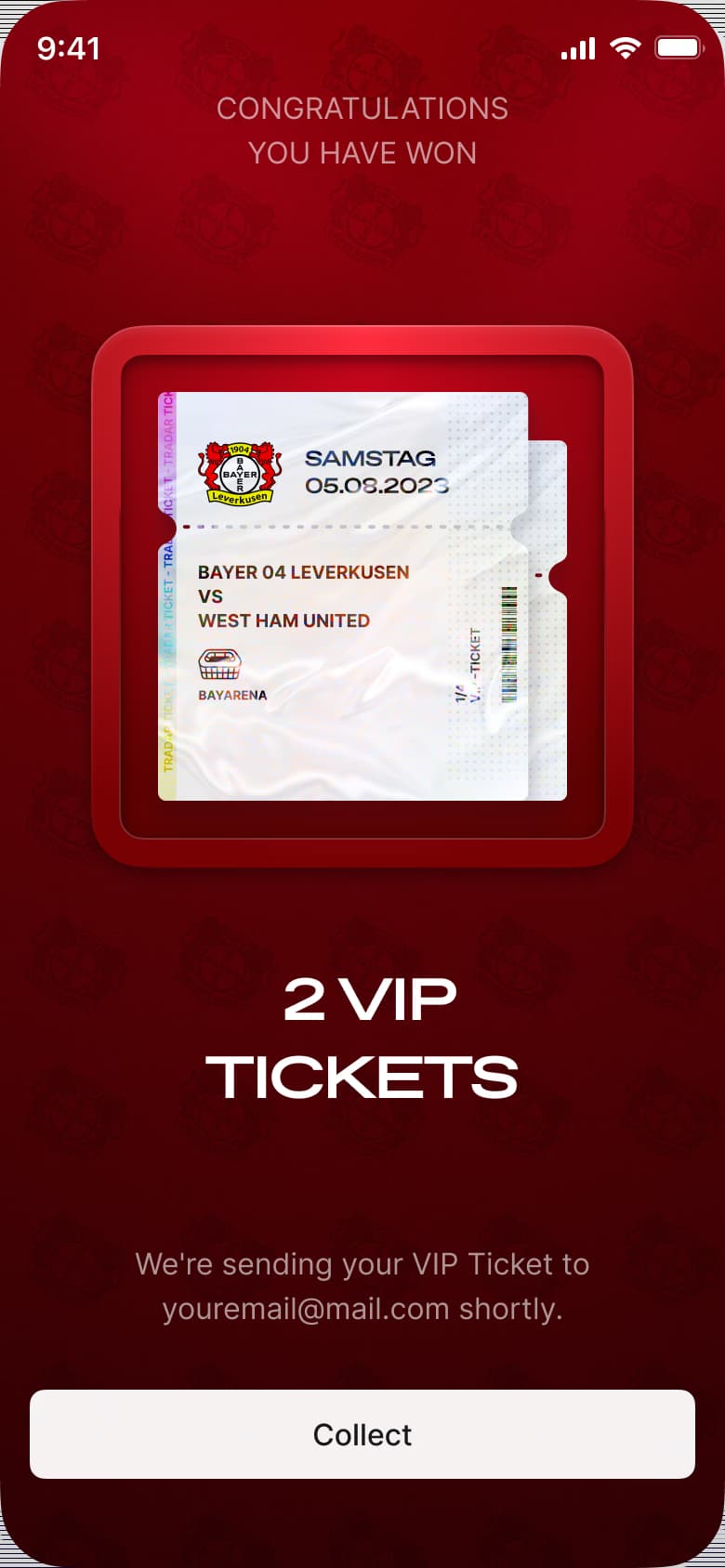
Store items, especially game tickets, had to be replaced frequently but followed a strict visual structure. I created a template connected to the design system and an Excel sheet. The marketing team only had to update the Excel sheet. The tickets were then automatically generated with custom club icons, names, ticket amounts, and dates.
Rive Animations
I designed and implemented state management animations using the Rive runtime. For transaction feedback, I wanted an idle animation that transformed based on the state. I designed a concept of a soccer ball moving towards a goal. Upon a successful transaction, the ball hit the goal and morphed into a green checkbox. Upon failure, it missed and transformed into a red error symbol.
Website
I designed and developed the complete landing page using Webflow, including CMS integration. The website is currently offline.
Outcomes
The project was successfully released and remained in operation for six months. Based on application store ratings, users explicitly highlighted the simplicity and clarity of the app. The project was eventually shut down due to internal structural conflicts within the company.
Learnings
- Pulling multiple disciplines together — design, writing, animation, and tooling — requires strong ownership and a clear product vision.
- Handling user funds demands an uncompromising approach to transparency and trust in every design decision.
- Keeping developer requirements and strict legal frameworks in mind is critical and cannot be treated as an afterthought.
- Challenging decisions and full responsibility for the design direction of a complex product build resilience and judgment that cannot be learned any other way.